
Douglas County Arrest to Court Records
After a Douglas County arrest, the first public record may be a jail entry or a daily arrest report from the Douglas County Sheriff's Office. Booking is the jail intake step. It may include identifiers, an arrest date, hold reasons, a bond line, and the agency that brought the person to the jail. That entry is not the same thing as the court file. The court file is maintained by the clerk once a criminal case is opened or indexed.
The local path is practical: arrest, transport to the Douglas County Sheriff's Office Law Enforcement & Adult Detention Center, intake, possible bond or first appearance, prosecutor review, filing in the proper court, and clerk indexing. Felony cases are handled by the Douglas County District Attorney in Superior Court. Misdemeanor and traffic prosecutions are handled by the Douglas County Solicitor-General in State Court. The Clerk of Superior and State Court maintains the official case record, while jail data remains the custody side of the event.
For the custody and booking side, use the Douglas County jail inmate records page. Booking photos and photo request rules are separate from the court charge record and belong with Douglas County jail mugshots.
Find Douglas County Court Records
The Douglas County Clerk of Superior Court points users to online public records access, and the county's case-search entry is the Douglas County Clerk WebSearch portal. The Clerk notes that name searches should be entered as last name, first name. The observed portal shell uses ICON Case Management and shows a WEBVIEW login route before search access. If a case number is known from a citation, bond paper, clerk notice, or attorney communication, it can be more precise than a name search.
The Clerk of Superior Court page is the local source for court-record access and clerk office context.
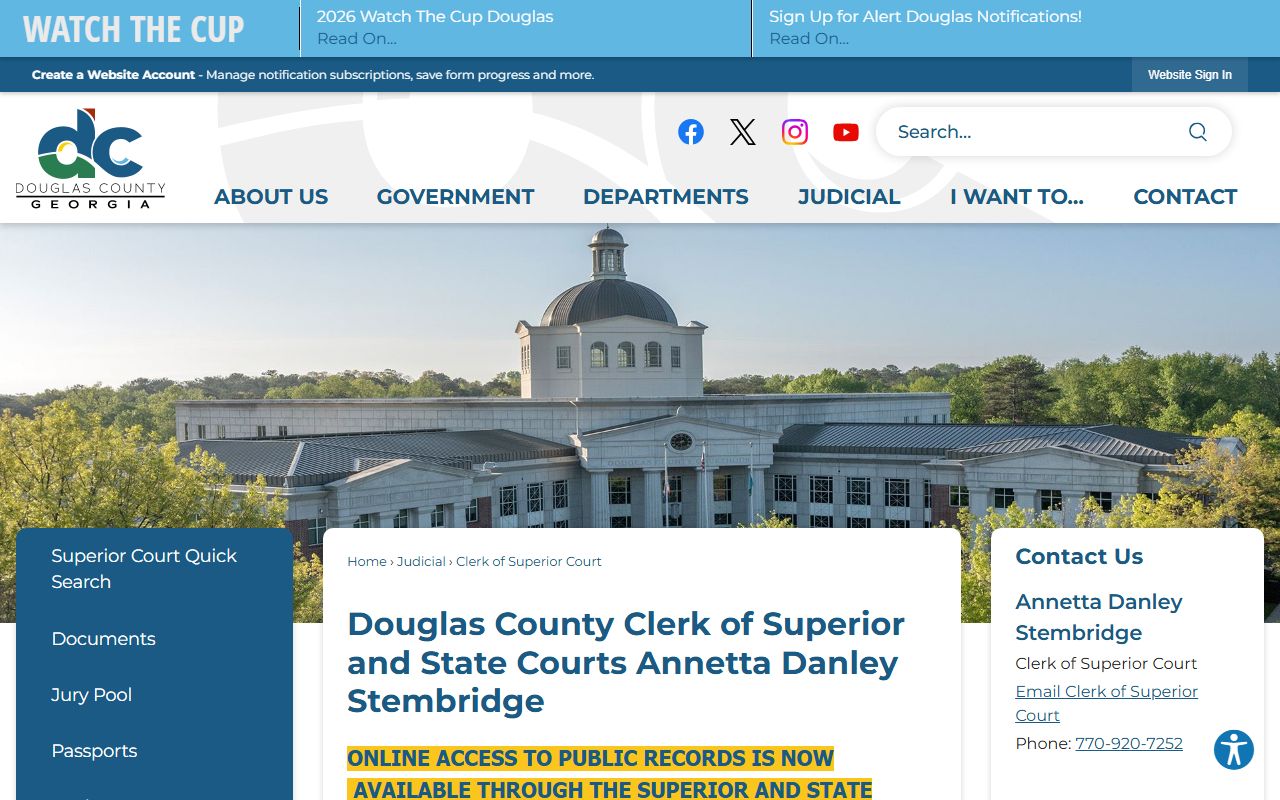
The clerk page is the better starting point when a jail arrest has moved into a filed Superior Court or State Court case.
The portal fields observed for Douglas County court records are limited at the entry shell, so the search should be treated as a court index access point rather than a full explanation of every post-login screen. re:SearchGA is also relevant because Georgia Courts eAccess lists Douglas Superior and Douglas State courts and routes users to provider search tools that may require an account.
| Field | Type | Use | Notes |
|---|---|---|---|
| UserID | Text | Portal entry | Observed as prefilled WEBVIEW in the shell. |
| UserPassword | Password | Portal entry | Shown on the WebSearch login screen. |
| Remember User Name | Checkbox | Convenience option | Visible at the login shell. |
| Name search | Search field | Defendant lookup | Clerk guidance says use LAST NAME, FIRST NAME. |
| Case number | Search field | Exact case lookup | Use when available from court paperwork or notices. |
Search Court Records After Arrest
A Douglas County court records after arrest search works best when the jail record and the court file are read together. The jail roster or daily arrest report can give the booking charge language. The court record shows what was filed, where the case is pending, and whether charges were amended, reduced, dismissed, or resolved. Prosecutors may decline a booking charge or file a different charge after review.
- Start with the Douglas County Sheriff's jail roster or daily arrest report to confirm the arrest name, arrest date, and booking charge text.
- Open the Douglas County WebSearch portal and search by last name, first name, or by case number if available.
- Check whether the matter is a felony Superior Court case, a misdemeanor State Court case, or a traffic matter.
- Read each charge line for code, level, status, bond, next hearing, and disposition if the case has moved that far.
- If the online index does not answer the question, contact the appropriate clerk office or request the record from the clerk.
The Douglas County WebSearch page is the local court portal used for public case access.
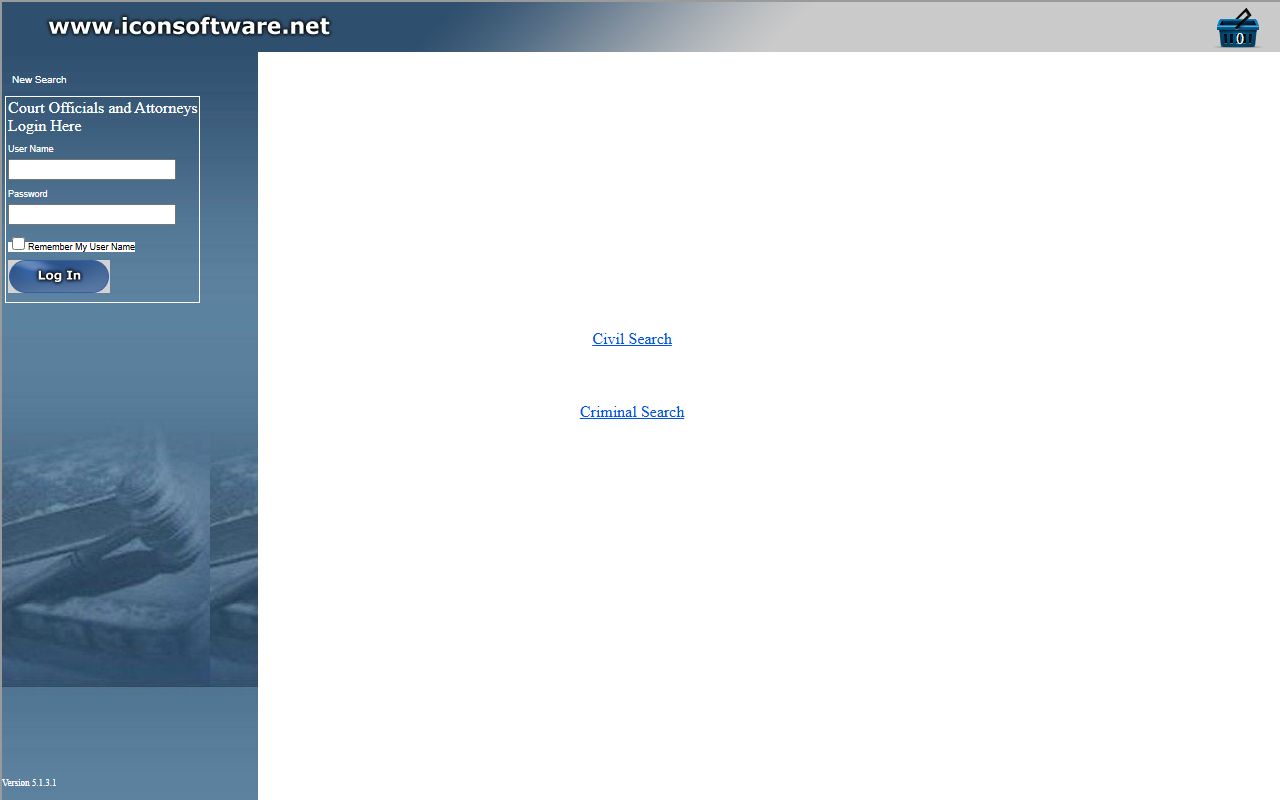
The WebSearch entry point is where a booking name can be checked against filed court cases.
Douglas County Charging Documents
Charging documents explain why a court case exists after an arrest. They are not all the same. A complaint may start early proceedings, an accusation or information may be filed by a prosecutor, and an indictment comes from a grand jury. Douglas County felony cases route through DA Dalia Racine and the Douglas Judicial Circuit. Douglas County State Court misdemeanor and traffic cases route through Solicitor-General Sonya Compton.
The Douglas County District Attorney site is the official prosecution source for felony case context.

The District Attorney's office is important when a jail arrest becomes a felony Superior Court filing.
| Document | Who Uses It | Common Role | What to Check |
|---|---|---|---|
| Complaint | Officer, prosecutor, or magistrate process | Starts or supports early criminal proceedings after arrest. | Named charge, sworn facts, warrant or first appearance link. |
| Information or accusation | Prosecutor | Formal charge filed without a grand jury indictment where allowed. | Final filed charge, count number, court, and amendments. |
| Indictment | Grand jury | Formal felony charging document returned in Superior Court. | Counts, offense dates, named defendants, and later disposition. |
Douglas County Charge Status
Charge status can change several times after a jail arrest. A row in the jail roster may reflect the arresting agency's hold reason, while the court record reflects the prosecutor's formal filing and the judge's orders. A charge can be pending even if the person is out on bond. It can also be reduced, amended, dismissed, or resolved by plea or trial. For that reason, a Douglas County court record after arrest should be checked by case number when possible.
| Status | Plain Meaning | Why It Matters |
|---|---|---|
| Pending | The charge has not reached a final disposition. | Future hearings, bond conditions, or filings may still occur. |
| Amended or reduced | The filed charge changed from the first charge text. | The court charge may differ from the booking charge. |
| Dismissed | The court no longer proceeds on that charge. | Other counts may still remain in the same case. |
| Nolle prosequi | The prosecutor declines to continue that charge. | It is a prosecutor action, not the same as an acquittal. |
| Disposition entered | A plea, verdict, sentence, or other final action appears. | This is the key line for conviction status. |
Note: A court charge is an accusation until a plea, verdict, or other disposition makes the outcome clear.
Douglas County Arrest Bond Hearings
Bond is part of the arrest-to-court path, but it is not proof that a case has ended. Douglas County Sheriff's Office jail information says criminal bond hearings are held at the Douglas County Courthouse at 8700 Hospital Dr., third floor, Courtroom #2. Hearings begin at 9:00 a.m. Monday, Wednesday, and Friday and at 8:30 a.m. Tuesday and Thursday. Douglas County Magistrate Court may handle bond hearings after arrest and preliminary hearings when a jailed defendant cannot make bond and the case has not yet gone to grand jury or accusation.
| Bond Type | How It Works in Practice |
|---|---|
| Cash bond | Money is paid directly, subject to court rules and later disposition. |
| Surety bond | A commercial bonding company posts the bond for a fee. |
| Property bond | DCSO requires deed, current tax statement, and mortgage statement documents. |
| Personal recognizance | The court releases the person on promise and conditions if ordered. |
| No-bond hold | No payment will release the person until the hold or court order changes. |
DCSO states that probation violations do not have bond. A probation officer may meet with the inmate, and unresolved violations can be presented to a judge.
Douglas County Warrant Records
Some court records after a jail arrest begin with a warrant. The Douglas County Fugitive and Warrants Division processes and executes criminal arrest warrants, records warrants in the Sheriff's Office database, works with agencies, and places wanted persons in NCIC when appropriate. The Zuercher portal bundle also contains a public warrants route, though the research did not confirm a complete live public warrant list from direct API access.
Warrant information should be checked through more than one channel. The sheriff's warrants division, BOLO or Most Wanted posts, court case history, and clerk records can each show a different piece. Missed traffic court can lead to a bench warrant, added charges, or license issues. Clearing or responding to a warrant is a court and attorney matter, not just a roster search.
Charges vs Convictions
An arrest charge and a conviction are different legal points. The charge explains what the government alleges. A conviction means guilt was established by plea, verdict, or another qualifying disposition. Background checks, court forms, and employment screens often treat these categories differently, so the Douglas County court record must be read for final disposition rather than only the booking charge.
| Issue | Charge | Conviction |
|---|---|---|
| Stage | Accusation after arrest or filing. | Outcome after plea, verdict, or judgment. |
| Proof level | Based on probable cause or prosecutor filing. | Requires proof beyond reasonable doubt or a valid plea. |
| Where seen | Jail roster, warrant, accusation, indictment, case docket. | Disposition and sentence entries in the court file. |
| Can change | Often amended, reduced, or dismissed. | Can be appealed, corrected, or restricted only under specific rules. |
Restricted Douglas County Court Records
Georgia uses the term record restriction for many criminal-history access limits. O.C.G.A. 35-3-37 is the key Georgia record restriction statute for eligible criminal-history records. A restricted record is not the same as a case that never existed, and eligibility depends on the charge, disposition, timing, and agency processing. The Douglas County Sheriff's Records Division links a request-to-restrict application and instructions for local records.
| Term | Georgia Context | Public Access Effect |
|---|---|---|
| Restricted | Georgia's common term under O.C.G.A. 35-3-37. | Limits access for non-criminal-justice purposes when approved. |
| Sealed | Often used broadly for court access limits. | May hide records from ordinary public view by court rule or order. |
| Expunged | Older or non-Georgia shorthand often used by the public. | Do not assume destruction; check Georgia restriction rules. |
| Juvenile or protected matter | May be withheld under statute or court rule. | Online public access may be blocked or redacted. |
Important: Douglas County Inmate Population is not a consumer reporting agency, and court or custody data must not be used for FCRA-covered decisions.
Douglas County Court Access Laws
Georgia open-government law and the Georgia Open Records Act guide explain the broad public-records framework. O.C.G.A. 50-18-70 and 50-18-71 cover public records, inspection, copying, written requests, timing, and fees. O.C.G.A. 50-18-72 lists exemptions, including law-enforcement, prosecution, juvenile, and protected personal-information limits. O.C.G.A. 42-4-7 requires sheriffs to keep records for people committed to county jail.
Those laws do not make every detail visible online. Court records after an arrest can be incomplete in a portal, delayed while a charge is reviewed, or limited by an exemption. The best record source is the office that created or maintains the record: the Sheriff's Office for jail custody records, the Clerk for the court file, the District Attorney for felony prosecution contact, and the Solicitor-General for misdemeanor or traffic prosecution contact.